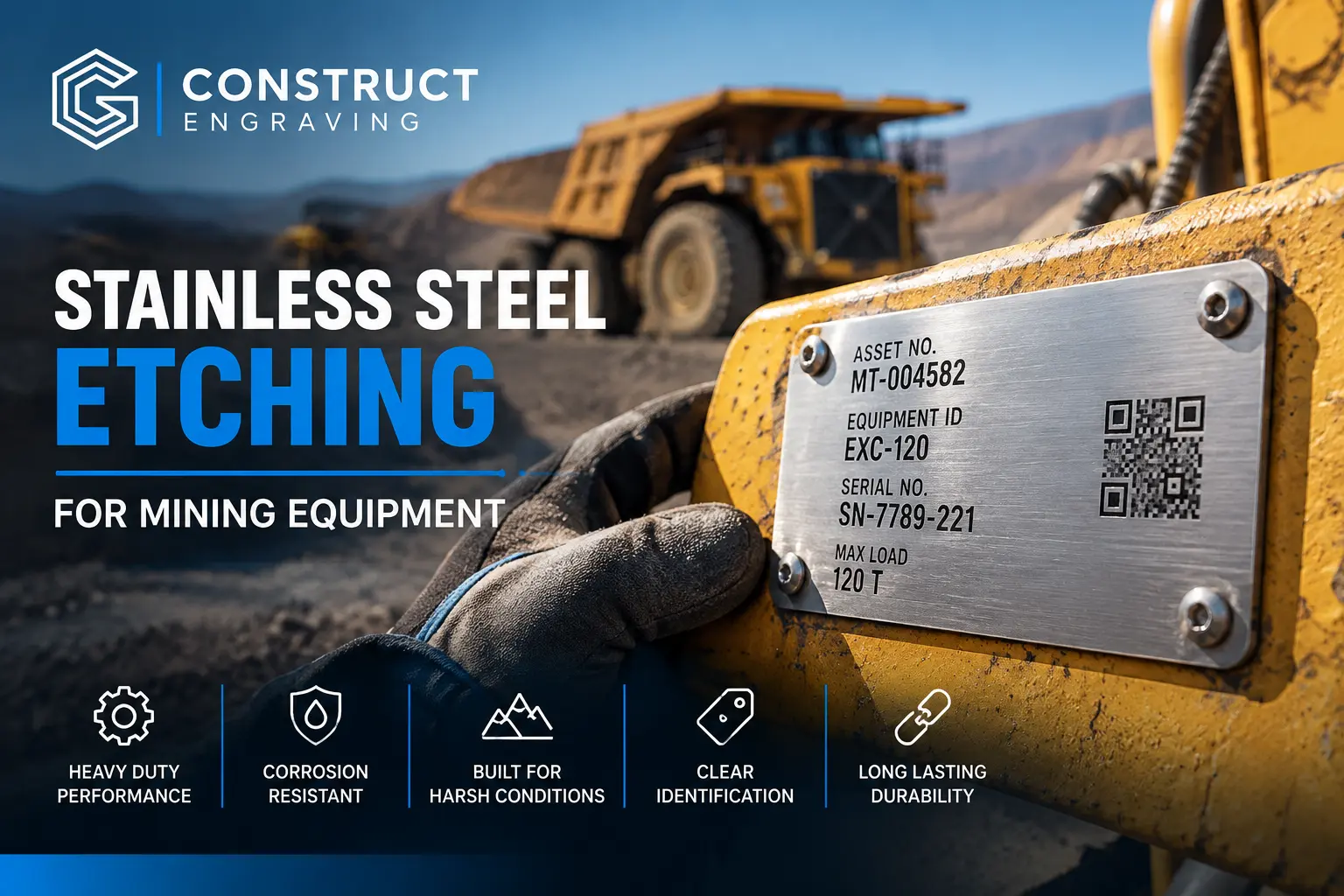
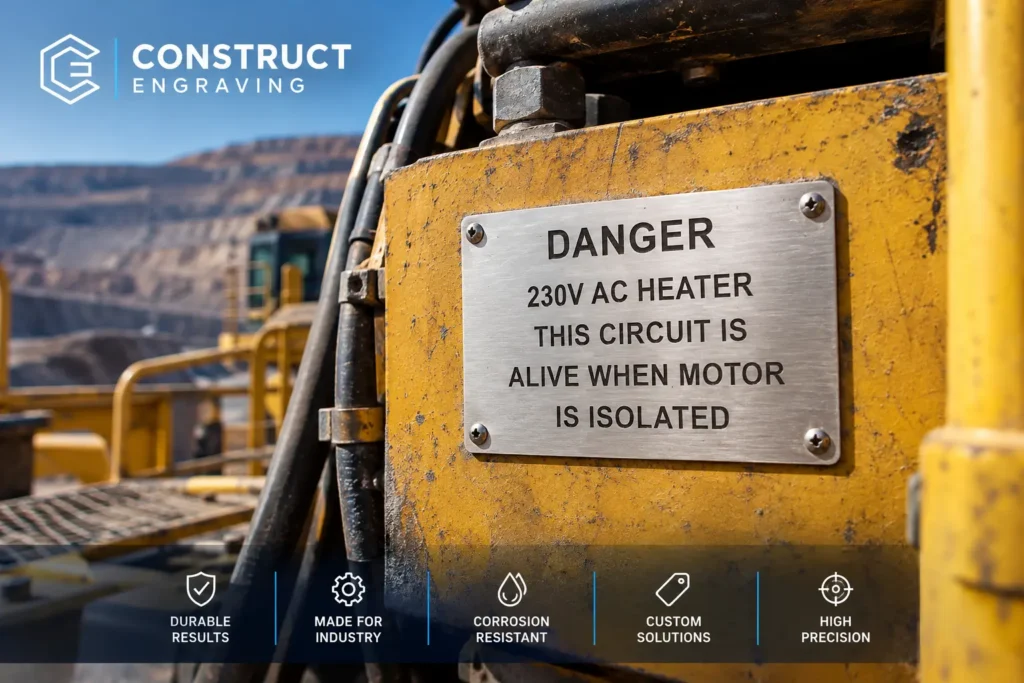
Mining equipment operates in demanding conditions. Dust, moisture, vibration and regular handling can affect the labels and plates used to identify it. Workers still need clear information for inspections, safety and maintenance.
Stainless steel etching is one option for creating durable identification on equipment tags, data plates and industrial signs. Stainless steel is valued for its strength and corrosion resistance, but the right result also depends on the marking method, material grade and conditions the finished item will face.
Why Use Stainless Steel for Mining Identification?
Stainless steel is used in many industrial settings because it offers strength and good resistance to corrosion. These properties make it a practical material for identification products that may be exposed to moisture, dirt, oils and frequent cleaning.
Tags and plates can display asset numbers, serial numbers, warnings and technical details. The material, marking and layout should be selected for the conditions the item will face.
Not every job needs the same specification. A plate fitted inside a control room may face different conditions from a tag attached to outdoor equipment. The stainless steel grade, thickness and finish should be chosen with the installation environment in mind.
What Is Stainless Steel Etching?
Stainless steel etching is a process used to create text, symbols or designs on the surface of stainless steel. Depending on the technique, the surface may be chemically altered or changed using a controlled laser process. Mechanical engraving is different: a cutting tool removes material to create a physical groove.
The terms are sometimes used interchangeably, but they do not always describe the same process. The best choice depends on the required appearance, level of detail and expected wear.
Where Are Etched Stainless Steel Plates Used?
Stainless steel identification products can support different tasks across a mining operation:
- Equipment tags: Display asset numbers, machine references or serial numbers for inspections and maintenance.
- Data plates: Carry manufacturer details, model information, ratings and technical specifications.
- Safety signs: Present hazard warnings and operating instructions where workers need clear information.
- Component tags: Help maintenance teams identify pipes, valves and parts during servicing.
- Asset labels: Support tracking and record-keeping for equipment, tools and site infrastructure.
The layout matters too. Text that is too small or crowded can be hard to read. QR codes and barcodes can be included where useful, provided they are sized for reliable scanning.
Etching, Engraving or Laser Marking: What Is the Difference?
No single marking method suits every mining application. Stainless steel etching, engraving steel and laser marking each produce different results.
Etching can be suitable for fine details and specific surface finishes. Mechanical engraving cuts into the metal and may be preferred when a recessed mark is needed. Laser marking can produce precise text, symbols and codes, depending on the equipment, settings and stainless steel finish.
“Laser etching” and “laser engraving” are also used to describe different laser marking effects. The result depends on how the laser interacts with the surface. If a tag will face abrasion, chemicals or repeated cleaning, ask how the proposed method is expected to perform in those conditions.
What Should You Check Before Ordering Mining Tags?
Planning the details before production can help avoid errors and replacement costs. Consider these points:
- Site conditions: Will the tag face weather, moisture, chemicals, heat, dust or abrasion?
- Required information: Confirm asset numbers, serial numbers, warnings, logos and technical details.
- Readability: Choose a size and layout that can be read from the expected viewing distance.
- Fixing method: Decide whether the plate will use screws, rivets, adhesive or another suitable fixing.
- Material and finish: Discuss the stainless steel grade, thickness and finish for the location.
- Proof approval: Check spelling, numbering, dimensions and layout before approving production.
Finding Engraving Support in Perth
Mining businesses comparing laser engraving Perth providers should ask about their experience with stainless steel, the types of tags and data plates they produce, and whether they can work from supplied drawings or specifications.
Construct Engraving has worked in engraving and industrial identification since 1981, producing metal, laser and CNC engraved products for a range of industries. If you are planning tags, plates or signs for mining equipment, sharing the intended use, material requirements and artwork early can help establish the right approach.
Final Thoughts
Stainless steel etching can play a useful role in equipment identification, but the material and marking method need to suit the application. By planning for site conditions, readability, fixing and the information required, mining businesses can order tags and data plates that are fit for purpose.
Frequently Asked Questions
Is stainless steel suitable for mining equipment tags?
It can be. Stainless steel is often selected for industrial tags because of its strength and corrosion resistance. The appropriate grade, thickness and marking method depend on site conditions and how the tag will be used.
What Is the Difference Between Stainless Steel Etching and Engraving?
Etching alters the surface through a chemical or other controlled process. Mechanical engraving uses a tool to cut into the metal. Laser marking can create different surface effects, depending on the method and settings.
Can Stainless Steel Tags Include QR Codes and Serial Numbers?
Yes. Tags can include serial numbers, asset references, text, symbols and QR codes. Their size, contrast and marking quality should suit the scanning conditions.
How Do I Choose a Marking Method for Mining Equipment?
Consider the conditions the tag will face, the information it needs to show and how long it must remain readable. An engraving specialist can recommend a suitable material, finish and process.