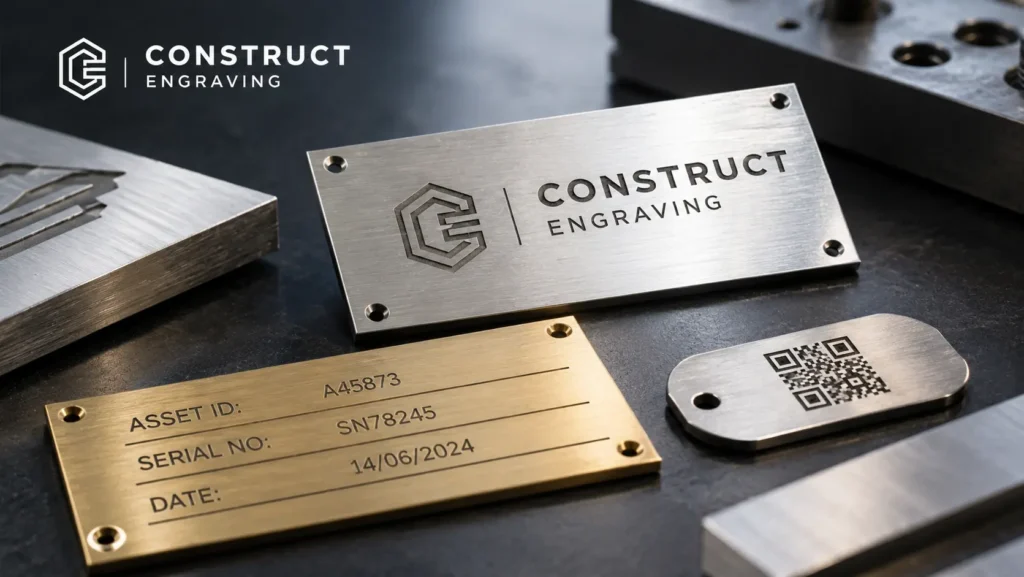
Choosing the right material is the biggest factor in how long an engraved plate stays readable. Get it right and tags, signs and labels last for years, even in tough conditions. Get it wrong and they end up scratched, corroded or faded before long. That’s why metal engraving starts with one question: which metal suits the job? This guide walks through aluminium, stainless steel and brass, and how to match each one to your project.
Pick aluminium for lightweight, good-value labels and data plates. Pick stainless steel when the plate has to cope with weather, washdowns or rough handling. Pick brass when looks matter as much as the information on it. The rest of this guide explains why, so you can choose with confidence.
What Is Metal Engraving Used For?
Metal engraving means permanently marking a metal surface with text, numbers, symbols or graphics. Unlike a sticker or printed label that can peel, fade or rub off, the information is cut or marked into the metal itself. That’s why it’s used for equipment tags, data plates, safety signs and switch plates across mining, oil and gas, electrical, and port and rail work.
How Do I Choose the Right Metal for Engraving?
Ask yourself three things before anything else:
Where will it be used? Indoors, outdoors, near salt air, chemicals, heat or heavy wear?
How long does it need to last? A short-term asset tag and a plate on a pump skid are very different jobs.
What should it look like? Some projects need high contrast and a plain finish. Others need something polished.
Once you’ve answered those, the right metal usually becomes obvious.
Is Aluminium Good for Engraving?
Yes, and it’s one of the most popular choices for engraved plates. Aluminium engraving suits data plates, identification tags, labels and signs because the metal is light, easy to work with and naturally resists corrosion. Anodised aluminium takes a clean, sharp mark with good contrast, so the text is easy to read on a switchboard or a piece of machinery.
The downside is that aluminium is softer than steel. If the plate is going to be knocked, scraped or abraded all day, it may not be the best pick. For most indoor and general industrial identification, though, it’s hard to beat on value. Electrical teams lean on aluminium engraving for control labels and switch plates for exactly this reason.
Can You Engrave Stainless Steel?
Yes. Engraving steel, stainless in particular, is the go-to when a plate has to survive tough conditions. Engraved steel stands up to weather, washdowns and wear better than softer metals, which is why it’s common on outdoor equipment, wet areas and demanding sites like mining and oil and gas.
The trade-off is cost and weight. Stainless is heavier and harder to work, so it usually costs more than aluminium. But if a plate needs to stay legible for years in a rough environment, the extra spend tends to pay for itself.
What About Brass Engraving?
Brass is what you choose when appearance counts. It has a warm, gold-toned finish that suits nameplates, signs and decorative plates, and it engraves cleanly. Left alone it will develop a patina over time, which some people love and others don’t. It’s less common than aluminium or stainless for pure industrial identification, but for commercial signage and presentation pieces it’s a great fit.
Which Metal Suits Which Industry?
Every site has its own demands, but a few patterns come up again and again:
Mining and oil and gas: stainless steel for exposed equipment, aluminium for general labels and data plates.
Electrical: aluminium for switch plates, control labels and safety information.
Port and rail: durable signs, tags and data plates, with the metal chosen to suit how exposed the location is.
Commercial and general: aluminium for signs and tags, brass for nameplates and a more polished look.
Treat these as starting points. If your situation is unusual, ask before you order.
Which Engraving Method Works Best on Metal Plates?
The material is only half the story. The method matters too. Metal plate engraving can be done with a few different techniques, depending on the job:
Laser etching and marking for fine, precise detail
CNC routering for labels, signs and cut-outs, with paint filling when you want extra contrast
Because the mark is part of the metal rather than sitting on top of it, engraving lasts far longer than a printed label. How long exactly depends on the metal, the method and the environment. A plate in a clean switchroom will outlast one baking in the sun beside a haul road, which is why choosing the right metal at the start matters so much.
Common Mistakes to Avoid
Choosing on price alone. A cheaper plate that needs replacing in two years isn’t really cheaper.
Forgetting the environment. Salt, chemicals and heat all change which metal makes sense.
Cramming in too much text. Smaller plates need shorter, clearer wording.
Final Thoughts
The right metal comes down to where the plate will be used, how long it needs to last and how it should look. Aluminium covers most general identification, stainless steel handles harsh conditions, and brass suits signage where appearance matters. If you’re still unsure, it’s worth talking the project through with an engraving specialist before ordering. Construct Engraving provides custom metal engraving in Perth WA and works with customers across Australia.
FAQ
What is the best metal for engraving?
There’s no single best. Aluminium suits most general identification, stainless steel suits harsh conditions, and brass suits decorative work.
Can you engrave any metal?
Most common metals can be engraved, but the result depends on the material and the method. Aluminium, stainless steel and brass are the most common choices for plates, tags and signs.
Is engraving better than a printed label?
For long-term use, usually yes. The marking is part of the metal, so it won’t peel or fade like a sticker.
Can I customise metal identification tags and data plates?
Yes. Text, numbers, symbols, sizes and layouts can all be tailored to suit your equipment.