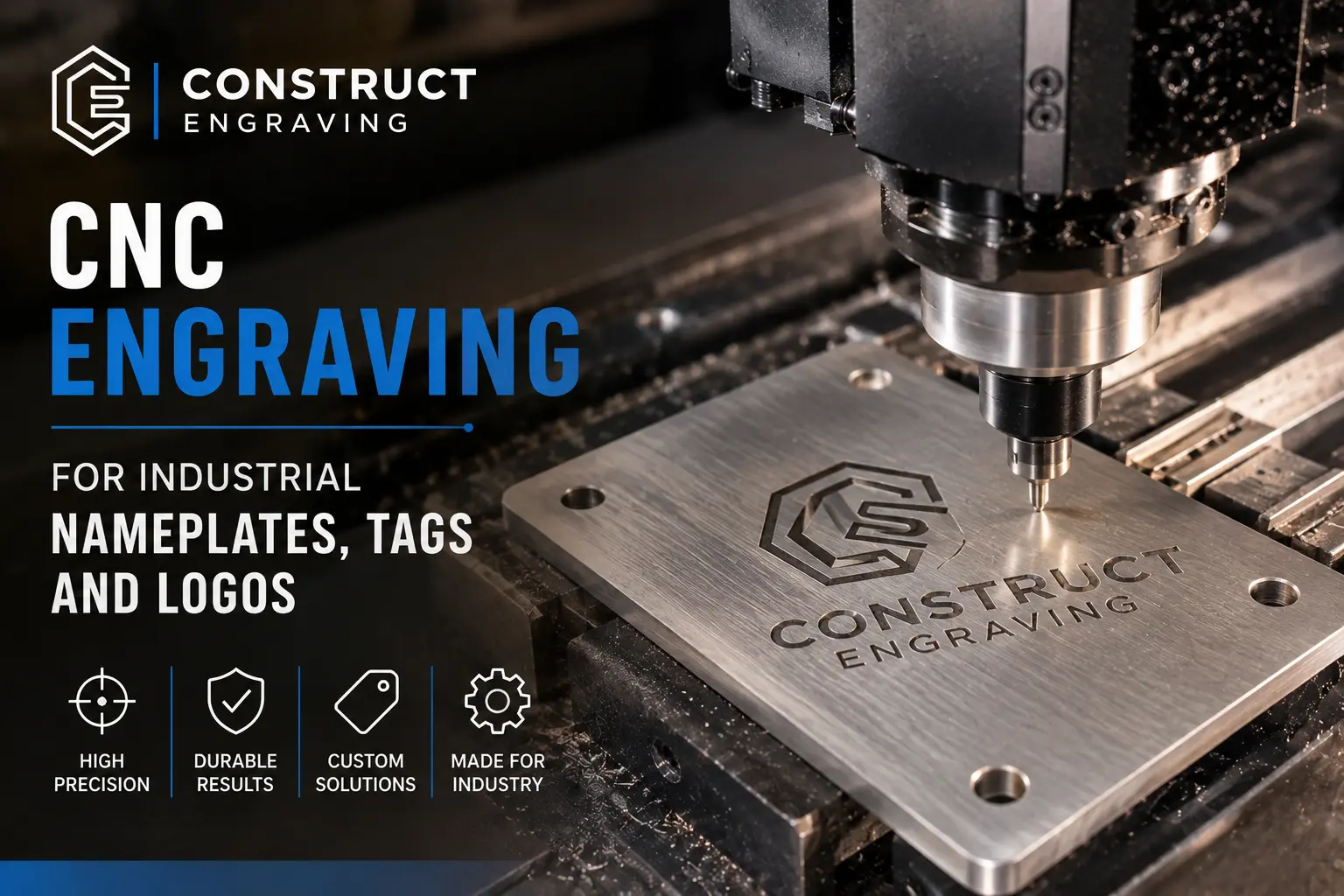
CNC engraving is a computer-controlled process that cuts text, numbers and logos directly into the surface of a plate, tag or panel. The marking becomes part of the material, so it stays legible through handling, cleaning and years of exposure. That is why it remains the standard for industrial identification across mining, electrical, oil and gas, and port and rail operations.
Choosing the right method, material and specification at the start prevents costly rework later. This guide explains how CNC engraving and diamond drag engraving differ, what mining site specifications typically require, and how to brief your supplier so nameplates and tags arrive right the first time.
How CNC Engraving Works
A CNC machine follows a digital file to guide a rotating cutting tool across the material, removing a controlled amount of the surface to form each character and graphic. Because the design is cut in rather than printed on, there is no adhesive to lift and no ink to fade or rub away.
The same file drives every part in a run, so a single nameplate and two hundred identical tags carry exactly the same layout, spacing and depth. At our Balcatta workshop this process covers equipment nameplates, identification tags, switch plates, engraved control panels and panel cut-outs.
Why Engraved Identification Outperforms Printed Labels
Industrial equipment is washed down, knocked about, heated and left in the sun. Printed labels and stickers struggle under those conditions, and where a tag identifies critical equipment, an unreadable label is more than an inconvenience. Engraved identification holds up because:
- The marking is cut into the plate rather than stuck onto it
- Regular cleaning and handling do not wear it away
- It stays readable for the working life of the asset
CNC Engraving and Diamond Drag Engraving Compared
The two methods suit different jobs. Standard CNC engraving removes material with a spinning tool, giving a deeper, bolder mark that suits larger lettering, logos and nameplates. Diamond drag engraving drags a fine diamond-tipped tool across the surface to leave a thin, permanent line, which suits small text and detailed legends on suitable metals and plastics.
In practice the right choice depends on the material, the size of the text and the environment the plate will live in. We confirm the best method when we quote.
Meeting Mining Site Engraving Specifications
Some mining companies set strict requirements for engraved identification. A common one is text engraved to a depth of 0.5 mm, as specified by BHP and Rio Tinto. Construct Engraving is familiar with these requests and works to them whenever they are asked for.
If your site has its own standard, send it with the enquiry. Agreeing depth, material and layout before production avoids plates being rejected on delivery.
Coloured Text and Logos
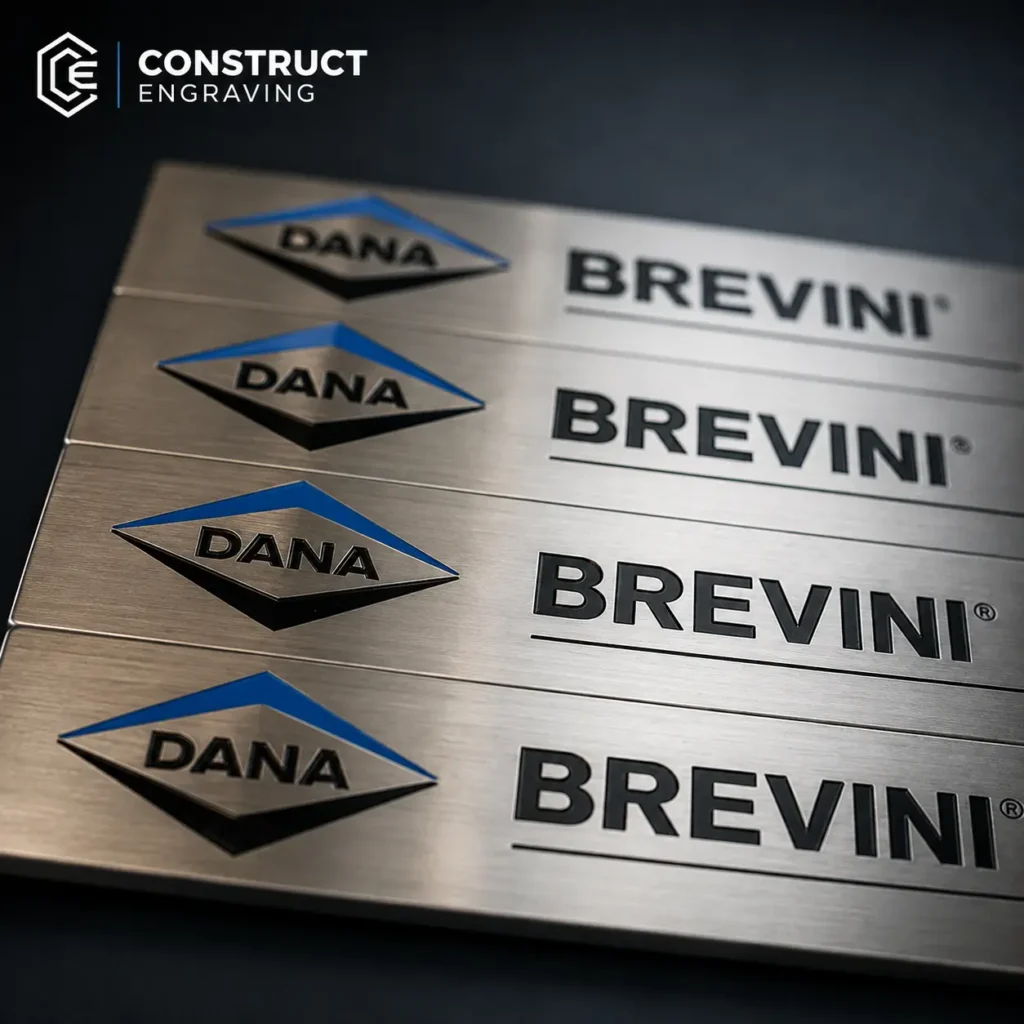
Coloured text and logos can be achieved through our CNC routing and engraving work. It is a practical option for company logos in brand colours, or for warning and safety legends that need to stand out against the plate. Raise colour at the quoting stage, since it can influence the choice of material and finish.
Choosing the Right Material
Material affects both appearance and durability, so match it to where the plate will be used.
- Plastics and engraving laminates: a common choice for labels, panels and control plates, where the engraving shows clearly and lasts
- Aluminium: tough identification with clear markings, as it machines and engraves well
- Stainless steel: strong, hard-wearing parts; engraved for selected applications, so confirm first
- Brass: plates and signs where appearance matters as much as durability
Panels, Switch Plates and Cut-Outs
Many jobs involve more than a single engraved plate. We can cut openings for switches, displays, controls and connectors, then engrave the same panel so it arrives finished and ready to fit.
Industries We Support
We supply mining, port and rail, oil and gas, electrical and general commercial customers, wherever clear, durable identification matters.
Briefing Your Engraver
A complete brief speeds up quoting and reduces errors. Have these ready:
- Text, logo or artwork files
- Plate size and thickness
- Material, if known
- Quantity required
- Where it will be used
- Site specifications such as depth or colour
- A photo or sample of an existing plate
If you are unsure which method or material suits, tell us where the plate will be installed and how it will be handled. We will recommend options and quotes at no cost.
Work With an Experienced Perth Engraver
Construct Engraving has been engraving since 1981, and mining, resources and electrical work is part of our everyday workload. We recommend materials and methods based on what suits your job, not what is easiest to produce. To discuss nameplates, tags or panels, request a free quote and send us what you have.
Frequently Asked Questions
What is CNC engraving used for?
It marks nameplates, identification tags, switch plates, control panels and signs with permanent text, numbers and logos.
What is diamond drag engraving?
A diamond-tipped tool is dragged across the surface to leave a fine, permanent line, mostly for small lettering and detail on suitable metals and plastics.
Can you engrave to 0.5 mm for BHP and Rio Tinto specifications?
Yes. We are familiar with these requirements and work with them when asked.
Can engraved text and logos be coloured?
Yes, coloured text and logos can be achieved.
What should I send for a quote?
Your text or artwork, plate size, material, quantity and any site specifications.