
How Electrical Labels and Safety Warning Signs Improve Workplace Safety
How Electrical Labels and Safety Warning Signs Improve Workplace Safety
Electrical labels are markers fixed to switchboards, circuits, cables and equipment so people can see what each item is, what it does and what hazard comes with it. Paired with safety warning signs, they help workers avoid shocks, burns and wiring mix-ups before a mistake happens. In short, good labelling makes electrical work faster, clearer and a lot safer.
What Are Electrical Labels?
Walk into any plant room, factory or commercial building and you’ll find electrical gear everywhere. Without labels, a switchboard is just a wall of identical breakers. Electrical labels fix that. They name each circuit, show voltage or current ratings, mark isolation points and flag equipment that needs special care.
A label can be as simple as a circuit number on a breaker or as detailed as an arc flash warning on a main switchboard. The common thread is that someone standing in front of the equipment can understand it in seconds, even if they’ve never seen it before.
Why Labelling Matters on Site
Most electrical incidents don’t come from complicated faults. They come from confusion. An electrician isolates the wrong circuit. A maintenance worker opens a panel assuming it’s dead. A contractor new to the site has no idea which supply feeds which machine.
Clear electrical labels reduce those risks in a few practical ways:
- Faster fault finding: maintenance teams trace the right circuit without guessing.
- Safer isolation: lockout and tagging is easier when every isolation point is clearly named.
- Quicker emergency response: in a fire or fault, people can shut down the right supply fast.
- Better handovers: new staff and contractors understand the setup without relying on one person’s memory.
Where Safety Warning Signs Fit In
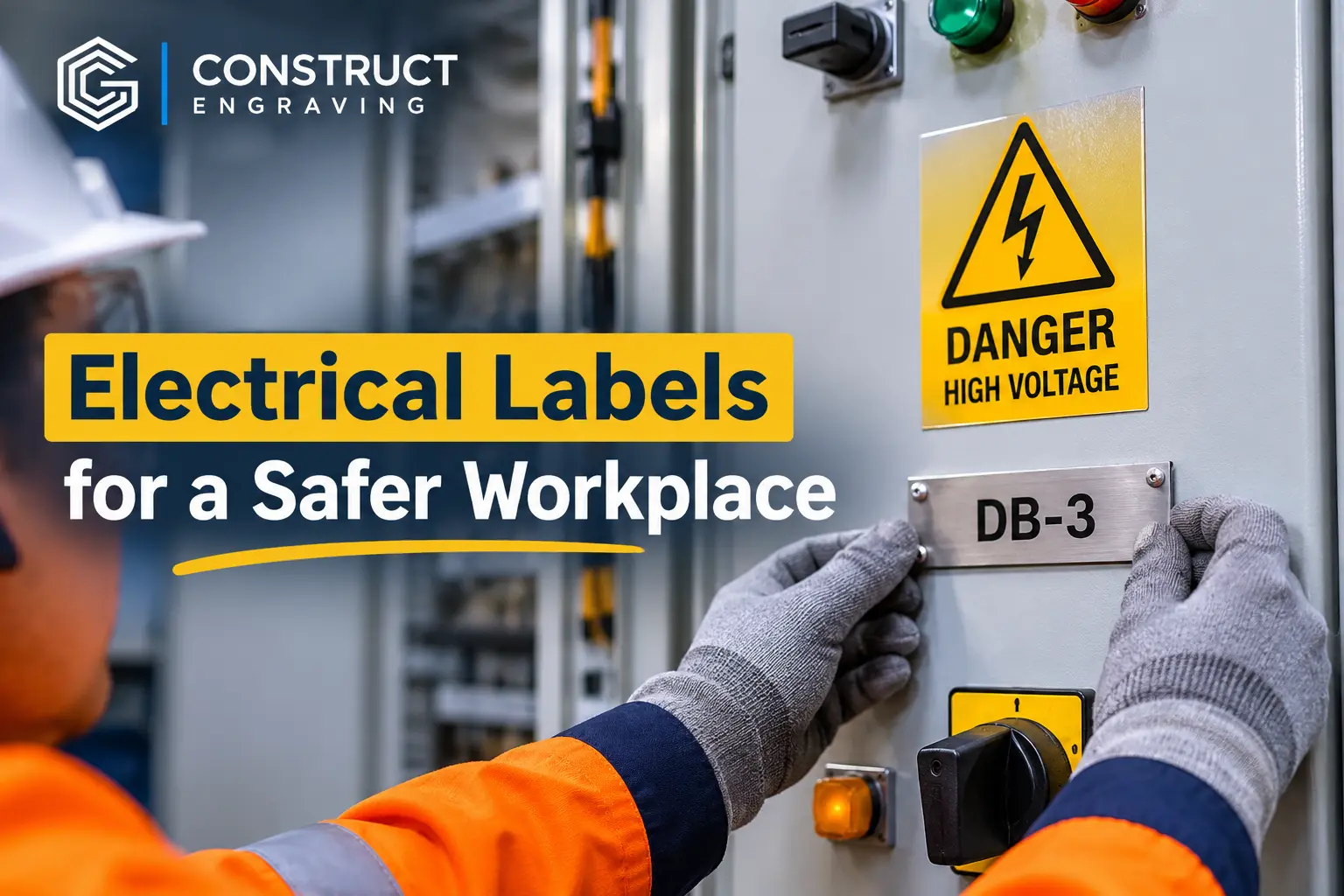
Labels identify. Safety warning signs alert. A label tells you a panel is “DB-3 Level 2”. A warning sign tells you there is live equipment behind the door and only authorised people should open it.
In Australia, safety signs generally follow a colour system so people can read the level of risk at a glance. Red usually signals danger or prohibition, yellow signals caution, blue covers mandatory actions, and green covers safe conditions and first aid. Common electrical examples include:
- Danger – Live Electrical Equipment
- Warning – High Voltage
- Authorised Personnel Only
- Isolate Before Opening
- Arc Flash Hazard
Used well, safety warning signs act as the last reminder before someone puts a hand where it shouldn’t go.
Choosing the Right Material
A label that peels, fades or smudges is worse than no label, because people stop trusting it. Pick the material to suit the environment.
Self-adhesive vinyl suits clean indoor panels. Outdoor switchboards, wash-down areas and hot or dusty spaces need UV-stable, chemical-resistant materials. For equipment that has to last for years, engraved electrical labels are a solid choice, since the text is cut into the surface rather than printed on it and won’t rub off.
Size and contrast matter too. Dark text on a light background stays readable in poor lighting, and letters should be big enough to read from where a person normally stands.
Placement Tips That Make a Difference
- Put labels where people will actually look, usually on the front of the panel or next to the device.
- Keep wording short and consistent across the site, so “Isolator” doesn’t become “Switch” in another building.
- Label both ends of cables and circuits where possible.
- Remove outdated labels when circuits change instead of covering them.
- Check labels during routine inspections and replace damaged ones straight away.
Common Mistakes to Avoid
Too many signs can be as bad as too few, because workers start tuning them out. Handwritten or temporary labels often end up staying for years. Names on the switchboard should match the drawings, otherwise the label causes the confusion it was meant to prevent. Labels stuck on removable covers can end up on the wrong panel. And after any upgrade or rewiring, labels are often the first thing forgotten.
Staying Compliant
Electrical labelling and signage are tied to workplace health and safety duties, and standards such as AS/NZS 3000 (the Wiring Rules) and AS 1319 (safety signs) set expectations. Requirements vary by site and state, so check current standards or ask a licensed electrician before you finalise a labelling plan. Treat compliance as the minimum, not the goal.
Final Thoughts
Electrical labels and safety warning signs cost very little compared with the risk they reduce. Clear, durable and well-placed labelling helps your team work faster, keeps contractors safe and shows you take workplace safety seriously. If your site’s labels are faded, missing or out of date, that’s the best place to start.
Frequently Asked Questions
What are electrical labels used for?
Electrical labels identify circuits, equipment, voltage levels and hazards so workers can operate, isolate and maintain electrical systems safely.
What is the difference between electrical labels and safety warning signs?
Electrical labels identify and describe equipment, while safety warning signs warn people about a hazard or tell them what action to take. Most worksites need both.
How often should electrical labels be checked?
Check them during regular inspections, and any time circuits are changed or equipment is replaced. Replace anything faded, damaged or unclear.
Do electrical labels need to follow Australian Standards?
Many electrical installations in Australia must meet standards such as AS/NZS 3000, and safety signs commonly follow AS 1319. Confirm the exact requirements for your site with a licensed electrician or WHS adviser.
Which labels are best for outdoor switchboards?
UV-resistant, weatherproof materials such as engraved plastic or durable industrial vinyl hold up best against sun, rain and dust.