Ever wondered how a flat sheet of metal or a plain piece of timber becomes a crisp, permanent sign? It looks simple once it’s done, but there’s a fair bit of planning and skill behind it. Engraving specialists don’t just press a button and walk away. They work through a careful process, from the first sketch to the final polish. In this post, we’ll walk you through how engraving specialists work, so you know what to expect before you order your next project.
What Do Engraving Specialists Actually Do?
An engraving specialist cuts, etches or carves a design into a surface so it lasts. That might be a name on a brass plaque, a logo on a trophy, a warning label on machinery, or a set of directional signs for an office. The work covers a huge range of materials and uses, but the goal is always the same: a clear, permanent mark that won’t peel, fade or rub off like printed lettering can.
What separates a good engraver from an average one is judgement. They know which material suits the job, which method gives the cleanest result, and how a design will look once it’s cut. That experience is what you’re paying for.
Step 1: The Consultation and Design
Every job starts with a conversation. A good engraver will ask where the item will live, who will see it, and how long it needs to last. A sign for a busy workshop has very different needs from a plaque in a quiet reception area.
Once the brief is clear, the design stage begins. Artwork is prepared digitally, usually in vector software, so lines stay sharp at any size. Fonts, spacing, logo placement and text size all get checked. Small text that looks fine on screen can turn into mush when it’s engraved, so specialists often adjust the layout to suit the material. Most will send a proof for your approval before any cutting starts, which saves a lot of headaches later.
Step 2: Choosing the Right Material
Material choice affects how the finished piece looks, feels and holds up over time. Here are some of the most common options:
- Brass and stainless steel: tough, professional and great for outdoor plaques and nameplates.
- Anodised aluminium: lightweight, weather resistant and available in plenty of colours.
- Acrylic: clean and modern, popular for office and retail signage.
- Timber: warm and natural, often used for gifts, awards and feature signs.
- Laminated plastics: a cost-effective choice for labels and indoor signs, with two layers in contrasting colours.
An engraving specialist will steer you toward what suits your budget and environment. A sign that sits in the sun all day needs a different material from one that stays indoors.
Step 3: Picking the Engraving Method
There are three main ways to engrave, and each suits different jobs.
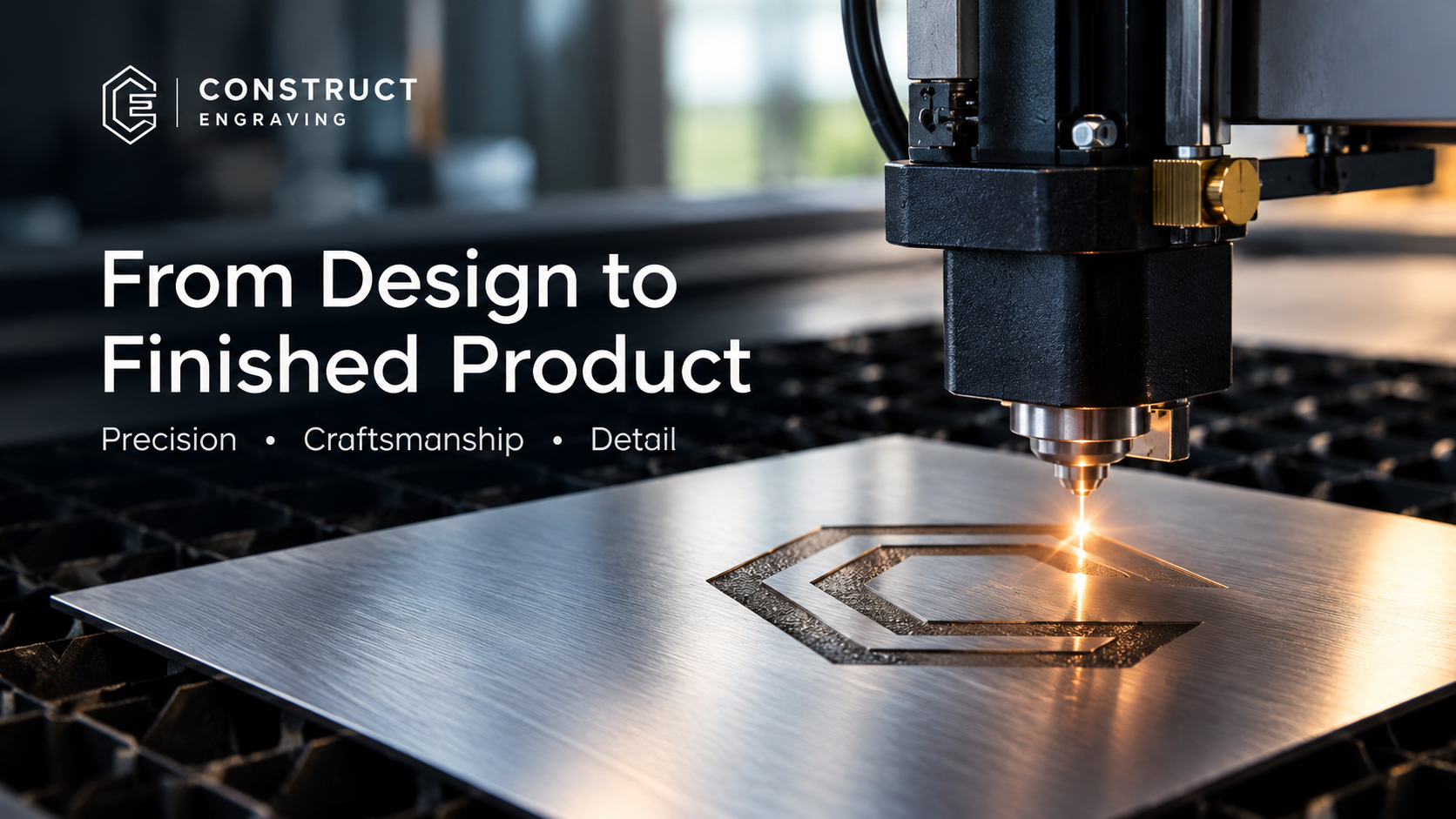
Laser engraving uses a focused beam to burn or etch the surface. It’s fast, very precise and ideal for fine detail like small text and detailed logos.
Rotary engraving uses a spinning cutter that physically carves into the material. It leaves a deeper, cleaner groove, which makes it a favourite for brass plaques, trophies and heavy-duty industrial signs.
Hand engraving is the traditional craft, done with hand tools by a skilled artisan. It’s slower and more expensive, but nothing matches it for jewellery, heirlooms and special one-off pieces.
Many engraving specialists run more than one type of machine, so they can match the method to your project instead of forcing every job through the same process.
Steps 4 and 5: Engraving, Finishing and Quality Checks
With the design approved, the material chosen and the method picked, the actual engraving can start. The material is secured on the machine bed so it can’t shift, and the settings are dialled in. That means speed, depth and power for a laser, or cutter size and feed rate for a rotary machine. Most specialists run a quick test on an offcut first, because every batch of material behaves a little differently.
When the cutting is done, the finishing begins. Pieces are cleaned, deburred and sometimes filled with paint or enamel to make the lettering pop. Edges are smoothed, protective films come off, and any mounting holes or fixings are added.
Finally, every piece gets checked against the approved proof. Is the spelling right? Are the lines crisp? Is the depth even? A careful engraver would rather redo a piece than let a flawed one leave the workshop.
Why the Process Matters for Custom Engraved Signs
Custom engraved signs are where all of these steps come together. Think of door plates, safety signs, office directories, memorial plaques or a handsome sign at the front gate. Because they’re made to order, the size, wording, colours and finish can all be tailored to the space.
They’re also built to last. Engraved lettering is cut into the material itself, so it handles sun, rain, cleaning and daily wear far better than stick-on or printed alternatives. For businesses, that means a sign that still looks sharp years down the track.
Finding Engravers Perth WA Businesses Can Trust
If you’re searching for engravers Perth WA has to offer, a few simple checks will help you choose well.
- Ask to see past work. A portfolio or photos of finished jobs tell you more than any sales pitch.
- Check their equipment. Specialists with both laser and rotary machines can handle a wider range of jobs.
- Look at the proofing process. You should see and approve a design before anything is cut.
- Ask about turnaround and materials. Clear answers on timing and options are a good sign.
- Think local. Working with engravers in Perth means easier communication, quicker delivery and the option to pop in and see samples.
Final Thoughts
Engraving looks effortless, but the best results come from good planning, the right material and a skilled hand. Now that you know how engraving specialists work, you can ask better questions and get a result you’ll be happy with for years.
Frequently Asked Questions
What do engraving specialists do?
Engraving specialists cut or etch text, logos and designs permanently into materials like metal, acrylic and timber. They handle everything from design and material selection to finishing and quality checks.
How long does it take to make custom engraved signs?
It depends on the size, material and level of detail. Simple signs can often be turned around quickly, while larger or more detailed orders take longer. Your engraver can confirm a timeframe when you ask for a quote.
What is the difference between laser and rotary engraving?
Laser engraving uses a focused beam to etch fine detail quickly. Rotary engraving uses a spinning cutter to carve a deeper groove, which suits plaques and outdoor signs.
Are custom engraved signs suitable for outdoor use?
Yes, when they’re made from the right material. Brass, stainless steel and anodised aluminium handle sun and rain well, and engraved lettering won’t peel like printed vinyl.
How do I choose between engravers in Perth WA?
Look at their past work, the equipment they use, and whether they provide a proof before cutting. Local engravers Perth WA businesses rely on will also be easy to reach and quick to deliver.
Can I supply my own logo or artwork?
Yes. Vector files such as AI, EPS or SVG give the sharpest results, though many engravers can also recreate a logo from a clear image.